Fake Progress: Are You Really Getting Stronger?
A shorter range, a faster lower, a little bounce. Three shortcuts that make a heavier weight feel possible and the exercise easier.
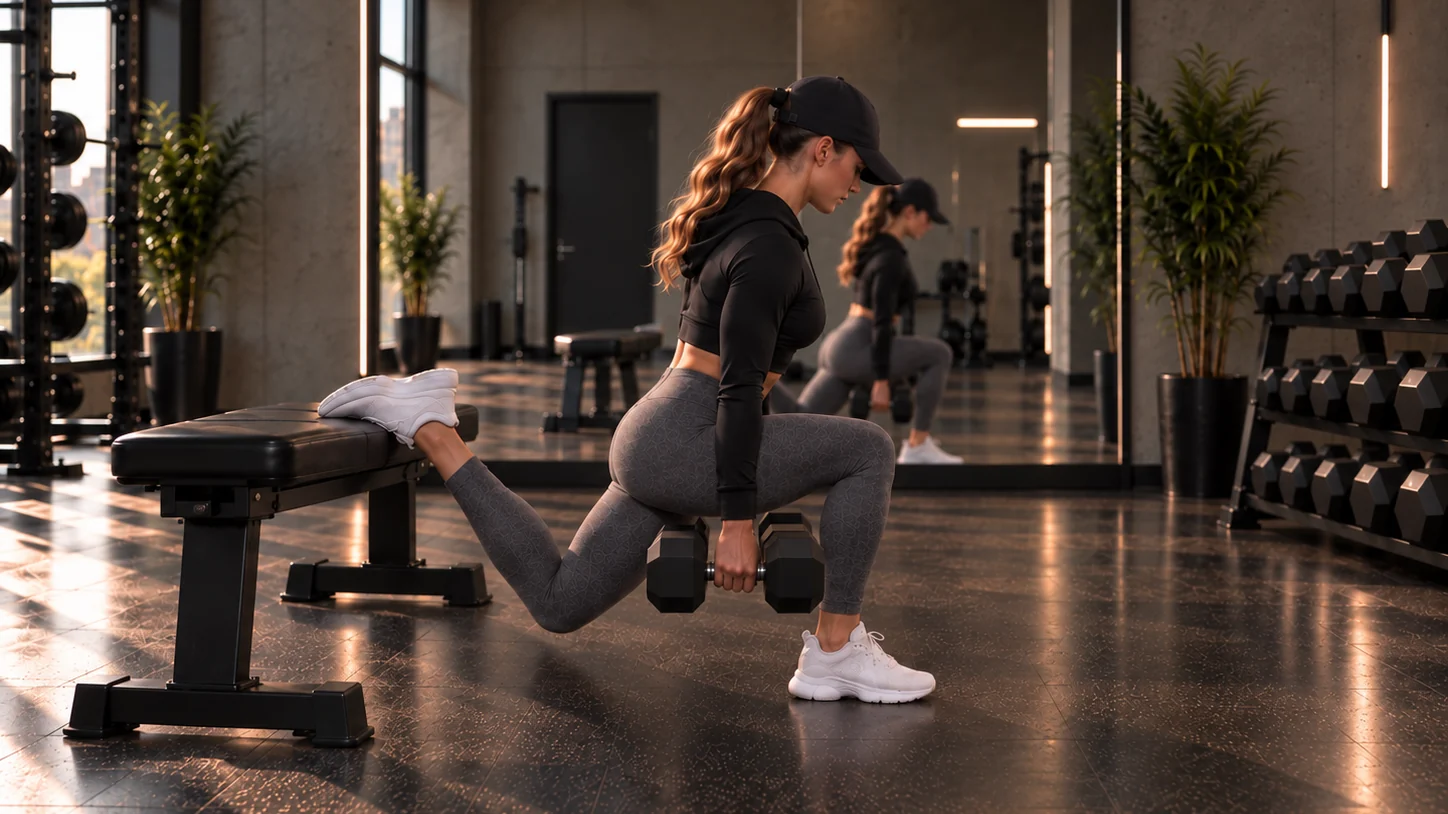
Here's a story I've watched play out more times than I can count. A client's logbook says she hip thrusted 95 pounds last week and 115 this week. Twenty pounds in seven days! We should be celebrating. Then I watch the set: her hips come up about two-thirds of the way, the lowering takes about half a second, and her lower back is doing an impression of a suspension bridge. The number on the bar went up. Her glutes did not get a promotion.
That's what I call fake progress, and it usually comes from one of three shortcuts. First, a shorter range of motion: hips that stop halfway up, split squats that go a little less deep every week. Second, a faster lowering: the five-second lower quietly turns into two seconds, so the hardest, most controlled part of the rep gets skipped. Third, momentum and compensation: bouncing out of the bottom, swinging the leg on kickbacks, or arching the lower back to fake a lockout. Each one makes a heavier weight feel possible while quietly making the exercise easier. You end up recording a better number for a worse exercise. None of this makes you a bad lifter. It's what almost everyone does when they care about the number on the bar and nobody has told them what the standard is. Once you know the standard, you can hold yourself to it.
This is why the Blueprint follows a strict ranking of six priorities, with one rule on top: never sacrifice an earlier priority to reach a later one. I'll give you the first one for free: technique. And resistance, the thing most people obsess over, doesn't show up until near the bottom of the list. It also helps to know that progress doesn't only mean more weight. A 2022 study by Plotkin and colleagues in PeerJ compared adding load with adding reps and found both led to similar muscle growth. Doing the same weight with cleaner reps, better control and more reps left in the tank is real progress too. You don't need to add plates every week to be moving forward. This is one of the biggest mindset shifts I see in the women I coach. When progress stops meaning "heavier or bust," training stops feeling like a test you can fail and starts feeling like a skill you're building.
So when does the weight go up? In the Blueprint, you earn it. First, every set has to meet the standard: you hit your target reps with good technique and the right tempo. Only then does the weight question even come up, and the answer comes from comparing how the set actually felt against that day's effort target. Sometimes the answer is "add weight." Often it's "stay here, you're exactly where you should be." Occasionally it's "wait and confirm it next time," and sometimes it's "bring it down." Book One lays out exactly how to tell which one applies, so you're never guessing. Progress follows your performance, not the calendar. And when you do increase, make the smallest jump available, not the 20-pound leap from the start of this post. If the new weight breaks your tempo or form, the jump was too big.
None of this works if you train from memory. ("Was it 95 or 105 last week? It felt like 105. Let's say 105.") A 2016 meta-analysis by Harkin and colleagues in Psychological Bulletin, covering nearly 20,000 people, found that tracking your progress improves your chances of reaching your goal, and the effect was stronger when progress was physically recorded. That's why the Blueprint app logs weight, reps and RIR for every set, then asks you to confirm whether your technique and tempo held up. Your next target is built from what actually happened, not from what you hoped happened. Six weeks from now, you'll be able to scroll back and see exactly how far you've come, which is a lot more motivating than a vague feeling.
Build real strength, not a pretty logbook. The Glute Gains Blueprint app tracks every qualified set and shows you when you've actually earned more weight. Book One lays out the full progression system, including exactly when to add weight, and Book Two teaches you to catch shortcuts before they cost you progress. Get the app and both books at glutegainsblueprint.com and make every number count.
Get the BlueprintSources
- Plotkin, D., Coleman, M., Van Every, D., et al. (2022). Progressive overload without progressing load? The effects of load or repetition progression on muscular adaptations. PeerJ, 10, e14142.
- Harkin, B., Webb, T. L., Chang, B. P. I., et al. (2016). Does monitoring goal progress promote goal attainment? A meta-analysis of the experimental evidence. Psychological Bulletin, 142(2), 198–229.
Disclaimer: This article is for general educational and informational purposes only and is not medical advice, diagnosis or treatment. Always consult a physician or other qualified healthcare professional before starting any new exercise or training program, especially if you have a medical condition, an injury, or are pregnant or postpartum. Stop exercising and seek medical attention if you experience pain, dizziness, shortness of breath or any other concerning symptoms. Individual results vary.