Feel It or It Didn't Count: The Mind-Muscle Connection
Not mystical, and not a substitute for hard training. A trainable skill that pays off most on your lighter sets.
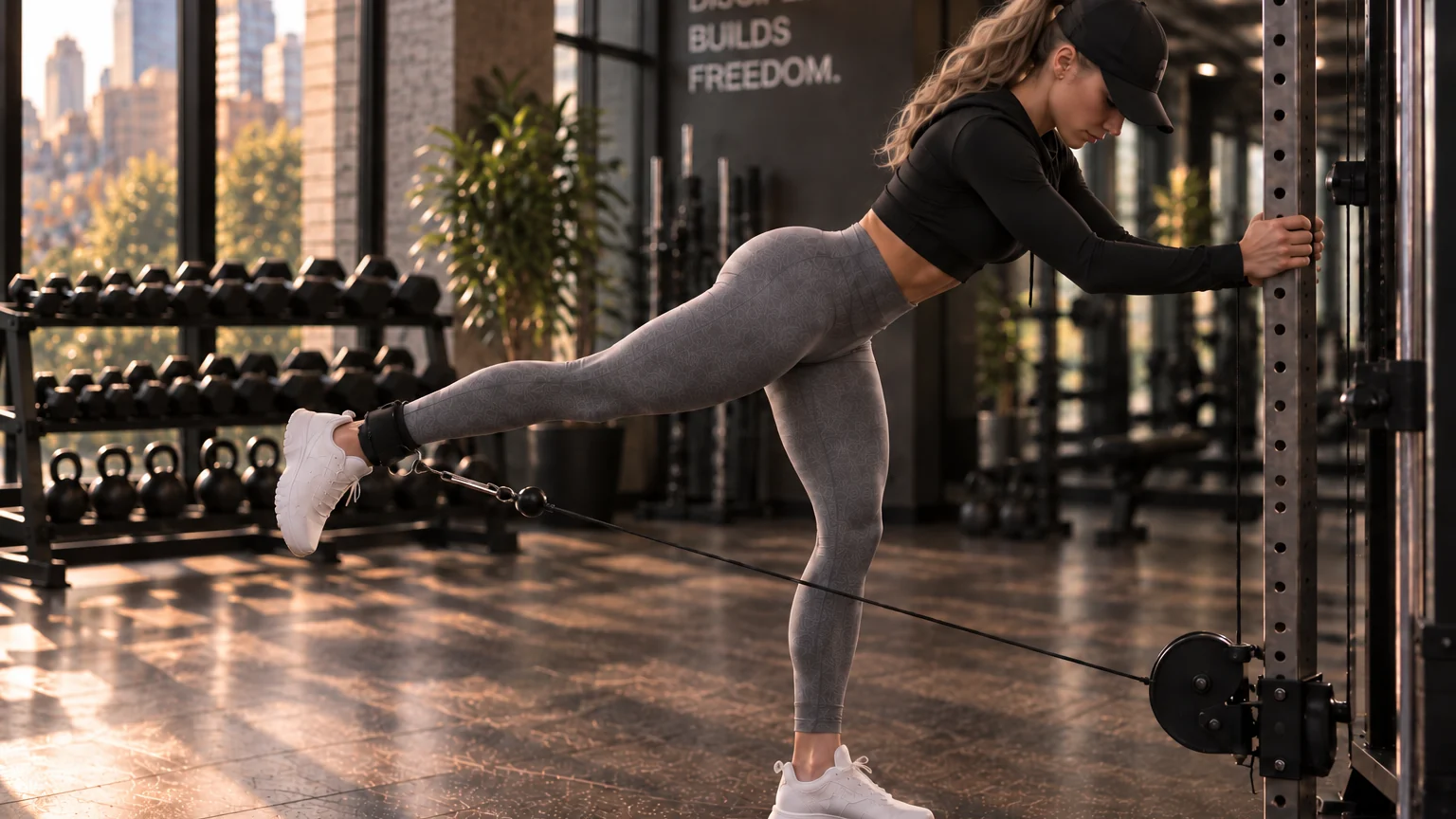
"I did the whole workout and I felt it in my quads, my lower back and, weirdly, my neck. Everywhere except my glutes." If that sounds familiar, welcome. You're in very good company. It's one of the first things new clients tell me, and it's almost never a strength problem. It's an attention problem. Your nervous system is running the rep, and right now it's letting whichever muscles have the most seniority do the job. The mind-muscle connection is how you get the right muscle to do the work. It isn't mystical, either. It's a trainable skill, a bit like learning to parallel park: awkward and effortful at first, automatic eventually.
Here's what the research says, without the hype. In a 2016 study in the European Journal of Applied Physiology, Calatayud and colleagues had trained lifters bench press while focusing on either their chest or their triceps. Focusing on a muscle increased its activity at light-to-moderate loads (up to about 60% of their max), but the effect disappeared at 80%. An earlier study by Snyder and Leech (2009) found a similar result for the lat pulldown after lifters were simply told which muscle to focus on. The most interesting study is a 2018 training study by Schoenfeld and colleagues in the European Journal of Sport Science: lifters who focused on "squeezing the muscle" grew their biceps more than lifters focused on moving the weight, but there was no clear difference for the quads. The honest summary: focus is a real tool, especially at moderate loads and in single-muscle exercises, but it doesn't replace hard, progressive training. Book Two is upfront about this too. Its Sources & Notes chapter separates what's backed by research from what comes from coaching experience, which is more than most fitness content bothers to do.
That tells you exactly where it pays off most: lighter, more isolated exercises and higher-rep work, plus every slow, controlled lowering phase, where the tempo gives you time to feel what's working. On your heaviest sets, keep the cue simple and let your technique carry the load. Don't try to meditate under a heavy barbell. A good rule of thumb: the lighter the load and the more isolated the exercise, the more attention you can put on the muscle. The heavier the load, the more your attention should go to position, brace and tempo.
You can start building the connection right now. While you're sitting, squeeze your glutes as hard as you can for three seconds, then let go. Do it a few times. (If you're reading this at work, you've just done your first secret workout. You're welcome.) That clear "that's the muscle" feeling is what you want to bring into your next set. Then use one cue per exercise, not a mental checklist. Here's a sample for the Hip Thrust: finish with your glutes, not your lower back. Book Two gives you a single, tested cue for every core movement in the program, so you're never guessing what to think about. One safety note from the book worth repeating: touch cues, like placing a hand on your glute to feel it tighten, are for unloaded setup practice only. During a loaded set, keep your hands where the exercise needs them.
Two mistakes to avoid. First, chasing the burn. The goal isn't the most dramatic sensation; it's productive reps at your target RIR. Second, overthinking. If you're so busy thinking about your glutes that your tempo falls apart, you've lost the rep. Practice the cue on purpose for a few weeks and it stops being a technique you think about. It just becomes how you train. For most clients, the first time they really feel their glutes drive a hip thrust is a lightbulb moment. After that, they can't unfeel it.
Stop guessing where you should feel it. Book Two, Mind-Muscle Connection, is the how-to layer of the Glute Gains Blueprint. It covers focus, breathing, bracing and a one-line cue for every exercise. Book One gives you the complete 12-week system, and the app puts each exercise's cue, demo video and Tempo Coach on your screen during every set. Get all three at glutegainsblueprint.com.
Get the BlueprintSources
- Calatayud, J., Vinstrup, J., Jakobsen, M. D., et al. (2016). Importance of mind-muscle connection during progressive resistance training. European Journal of Applied Physiology, 116(3), 527–533.
- Snyder, B. J., & Leech, J. R. (2009). Voluntary increase in latissimus dorsi muscle activity during the lat pull-down following expert instruction. Journal of Strength and Conditioning Research, 23(8), 2204–2209.
- Schoenfeld, B. J., Vigotsky, A., Contreras, B., et al. (2018). Differential effects of attentional focus strategies during long-term resistance training. European Journal of Sport Science, 18(5), 705–712.
Disclaimer: This article is for general educational and informational purposes only and is not medical advice, diagnosis or treatment. Always consult a physician or other qualified healthcare professional before starting any new exercise or training program, especially if you have a medical condition, an injury, or are pregnant or postpartum. Stop exercising and seek medical attention if you experience pain, dizziness, shortness of breath or any other concerning symptoms. Individual results vary.