Your Glutes Clocked Out at 9 a.m.
Eight hours of sitting teaches your glutes to stay quiet. Why the five-minute warm-up isn't the optional part.
Let's do some quick math on a typical day. You sit on the drive to work, sit at your desk for eight hours, sit on the drive home, then sit on the couch while you tell yourself you'll go to the gym "after one more episode." That's a lot of hours with your glutes switched off and your hip flexors (the muscles at the front of your hips) stuck in a shortened position. Spine researcher Stuart McGill popularized a name for what many coaches see next: "gluteal amnesia," glutes that are slow to switch on when you finally need them. It's a coaching concept, not a medical diagnosis, but if you've ever done a hip thrust and felt it everywhere except your glutes, you've probably met it.
Why should you care beyond appearance? Because your glutes are major stabilizers for your hips, pelvis and knees. A 2019 systematic review by Sadler and colleagues found that people with low back pain tended to have weaker gluteus medius muscles than people without it. An earlier review by Prins and van der Wurff (2009) found that women with pain around the kneecap tended to have weaker hip muscles. Those studies show a link, not proof that weak glutes cause pain, and pain has many causes, so see a professional if something hurts. Still, strength training is one of the best-supported injury-prevention tools there is: a 2018 meta-analysis by Lauersen and colleagues in the British Journal of Sports Medicine found that strength training cut sports injuries by roughly a third and overuse injuries by almost half.
In real life, sleepy glutes look the same in client after client. The hip thrust gets felt in the hamstrings or lower back. The knees cave inward during lunges. Step-ups turn into a push off the back foot. "I can't feel my glutes at all" is probably the most common thing I hear from new clients, and it's rarely because they're doing everything wrong. Usually the other muscles have simply gotten used to doing the job. Think of it like a group chat where one friend always answers first. Your hamstrings and lower back have been answering for years, so your glutes stopped checking their phone. The good news is that this is a skill problem, and skills can be retrained. Most women I coach notice their glutes switching on more easily once the warm-up becomes routine.
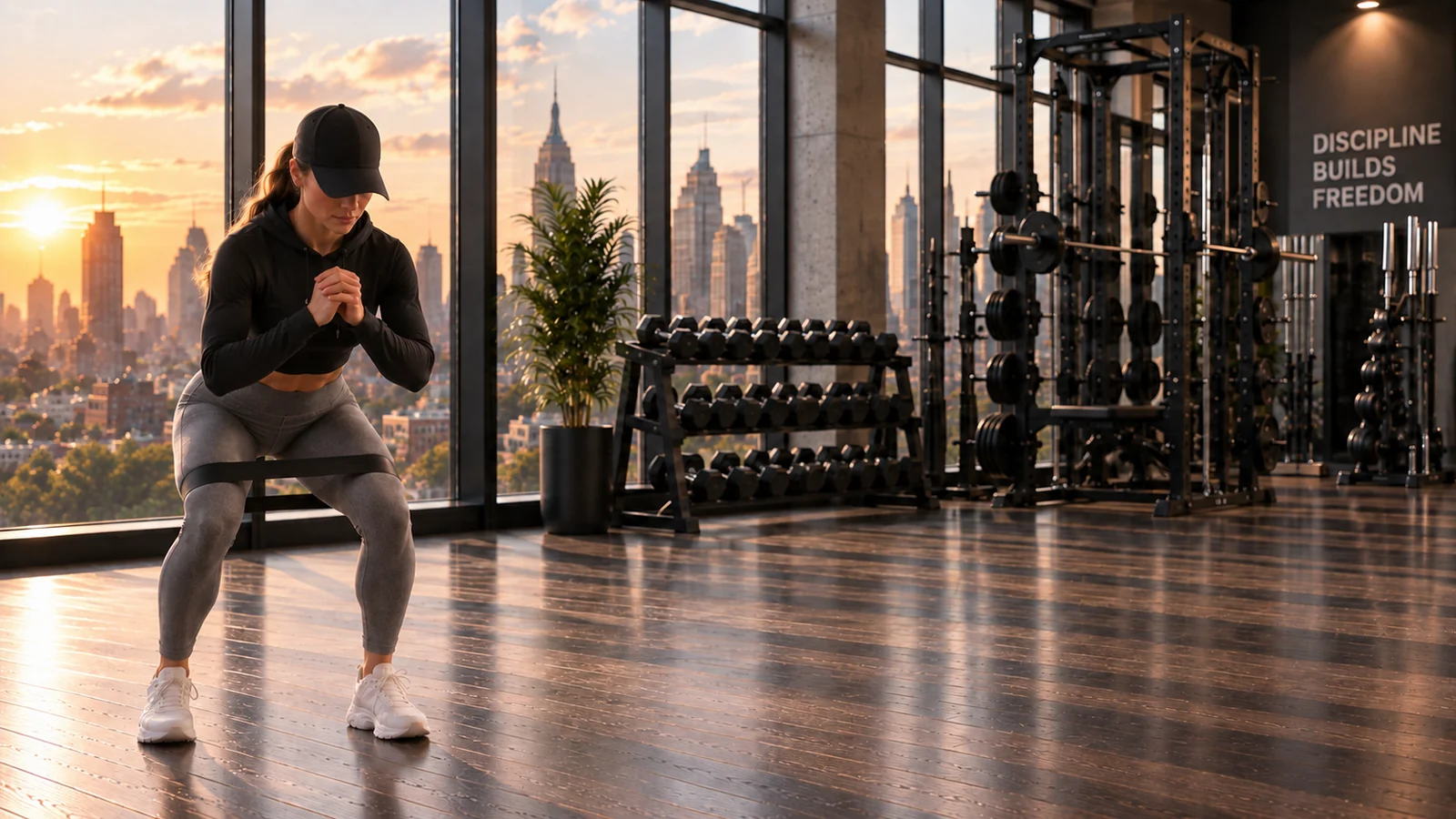
That's why every Glute Gains Blueprint session opens with the same short activation routine, no exceptions. It's two simple movements, it takes five to ten minutes, and it's designed to switch your glutes on before any real load touches them. It's not just coach superstition, either. In a 2012 study by Crow and colleagues, elite rugby players who did a short series of low-load glute exercises produced more power in a jump test right afterward. The details matter more than people expect: your stance, where your feet point, where you keep tension and how long you hold the squeeze all decide whether the routine actually wakes up your glutes or just lets your hamstrings take over again. Most people who tell me warm-ups "don't work" for them are doing the right moves the wrong way. (And no dragging your feet through it like the warm-up owes you money.)
Outside the gym, you don't need to overhaul your life. Stand up every 30–60 minutes, walk to refill your water, or do a few standing glute squeezes while you wait for the coffee maker. (Coworkers may give you a look. Let them wonder.) If you have a standing desk, switch between sitting and standing through the day. If your hip flexors feel tight, a gentle half-kneeling hip flexor stretch with a light glute squeeze on the kneeling side is a nice way to undo some of the day's sitting. None of this replaces training, but it helps your glutes show up to the gym already half awake. The real fix, though, is consistent, structured training that asks your glutes to do their job three times a week.
Wake them up and put them to work. The Glute Gains Blueprint app walks you through the warm-up and all 36 workouts, with demo videos and a Tempo Coach for every movement. Book One covers glute anatomy, the warm-up and the full 12-week plan, and Book Two teaches you how to feel the right muscle on every rep. Grab the app and both books at glutegainsblueprint.com.
Get the BlueprintSources
- McGill, S. (2016). Low Back Disorders: Evidence-Based Prevention and Rehabilitation (3rd ed.). Human Kinetics.
- Sadler, S., Cassidy, S., Peterson, B., Spink, M., & Chuter, V. (2019). Gluteus medius muscle function in people with and without low back pain: a systematic review. BMC Musculoskeletal Disorders, 20, 463.
- Prins, M. R., & van der Wurff, P. (2009). Females with patellofemoral pain syndrome have weak hip muscles: a systematic review. Australian Journal of Physiotherapy, 55(1), 9–15.
- Lauersen, J. B., Andersen, T. E., & Andersen, L. B. (2018). Strength training as superior, dose-dependent and safe prevention of acute and overuse sports injuries: a systematic review, qualitative analysis and meta-analysis. British Journal of Sports Medicine, 52, 1557–1563.
- Crow, J. F., Buttifant, D., Kearny, S. G., & Hrysomallis, C. (2012). Low load exercises targeting the gluteal muscle group acutely enhance explosive power output in elite athletes. Journal of Strength and Conditioning Research, 26(2), 438–442.
Disclaimer: This article is for general educational and informational purposes only and is not medical advice, diagnosis or treatment. Always consult a physician or other qualified healthcare professional before starting any new exercise or training program, especially if you have a medical condition, an injury, or are pregnant or postpartum. Stop exercising and seek medical attention if you experience pain, dizziness, shortness of breath or any other concerning symptoms. Individual results vary.