You've Heard of Deadlifts. But Are You Doing the Right One for Your Glutes?
Conventional, sumo, Romanian or stiff-leg? They're not the same lift, and they don't load your glutes the same way.
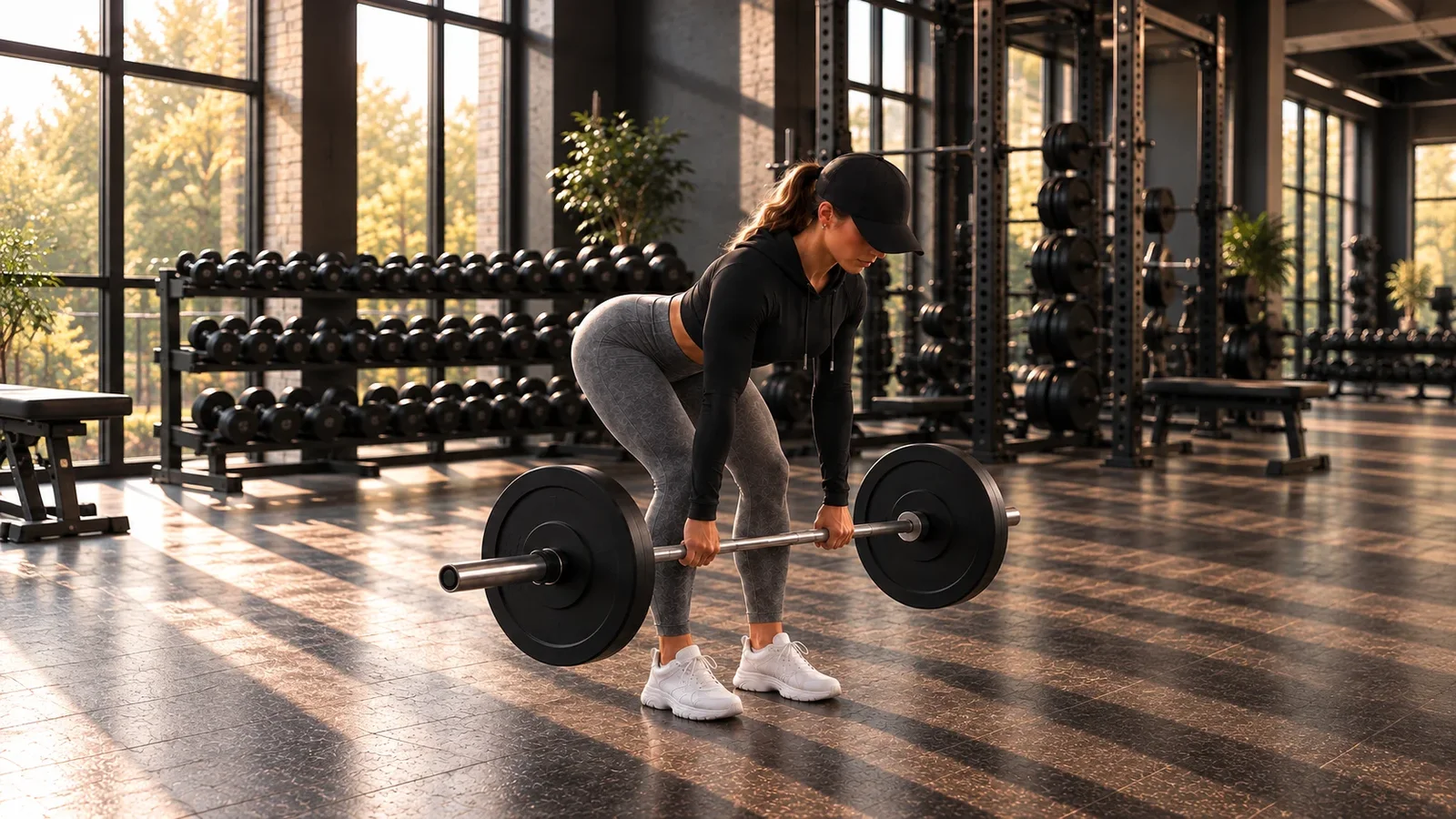
Okay, fair warning: this one is a slightly longer read than usual, and that's on purpose, because the deadlift is that important. It isn't just a lift for looks. Every time you pick up a laundry basket, lift a toddler, haul groceries out of the trunk or grab a suitcase off the floor, you're doing a version of it, and training it well can make those everyday moments easier. So grab a coffee and let's get into it. "Deadlift" sounds like one exercise, but walk into any gym and you'll see at least four different lifts going by that name, often performed by people who aren't sure which one they're doing. I see it with new clients all the time: someone says she does "deadlifts," I ask her to show me, and what I get is half squat, half hinge, with a dash of lower-back panic. What's actually happening at your hips and knees decides whether your glutes, your hamstrings or your quads do most of the work. The honest version, before we go further: small differences in muscle activity (the electrical signal a working muscle gives off, measured with a technique called EMG) don't automatically mean more growth. So let's break down the conventional, sumo, Romanian and stiff-leg deadlift and which one belongs in a glute-focused program.
The conventional deadlift is the classic. The bar starts on the floor, you bend at both your hips and knees to grip it, and you stand up until your hips and knees lock out together. Because your knees bend a lot at the start, your quads are heavily involved in breaking the bar off the floor. In a 2018 study in the Journal of Exercise Science and Fitness, Lee and colleagues had experienced lifters perform both the conventional and Romanian deadlift at the same load. The conventional version produced far more rectus femoris activity (one of the quad muscles) and slightly more gluteus maximus activity, with no significant difference in the hamstrings. Translation: it's a fantastic full-body strength lift, but for glute-specific development it spreads the work around more than you'd expect. It also lets most people lift more weight than the hinge-style versions, which is great for your ego and less great if the ego starts making the technique decisions.
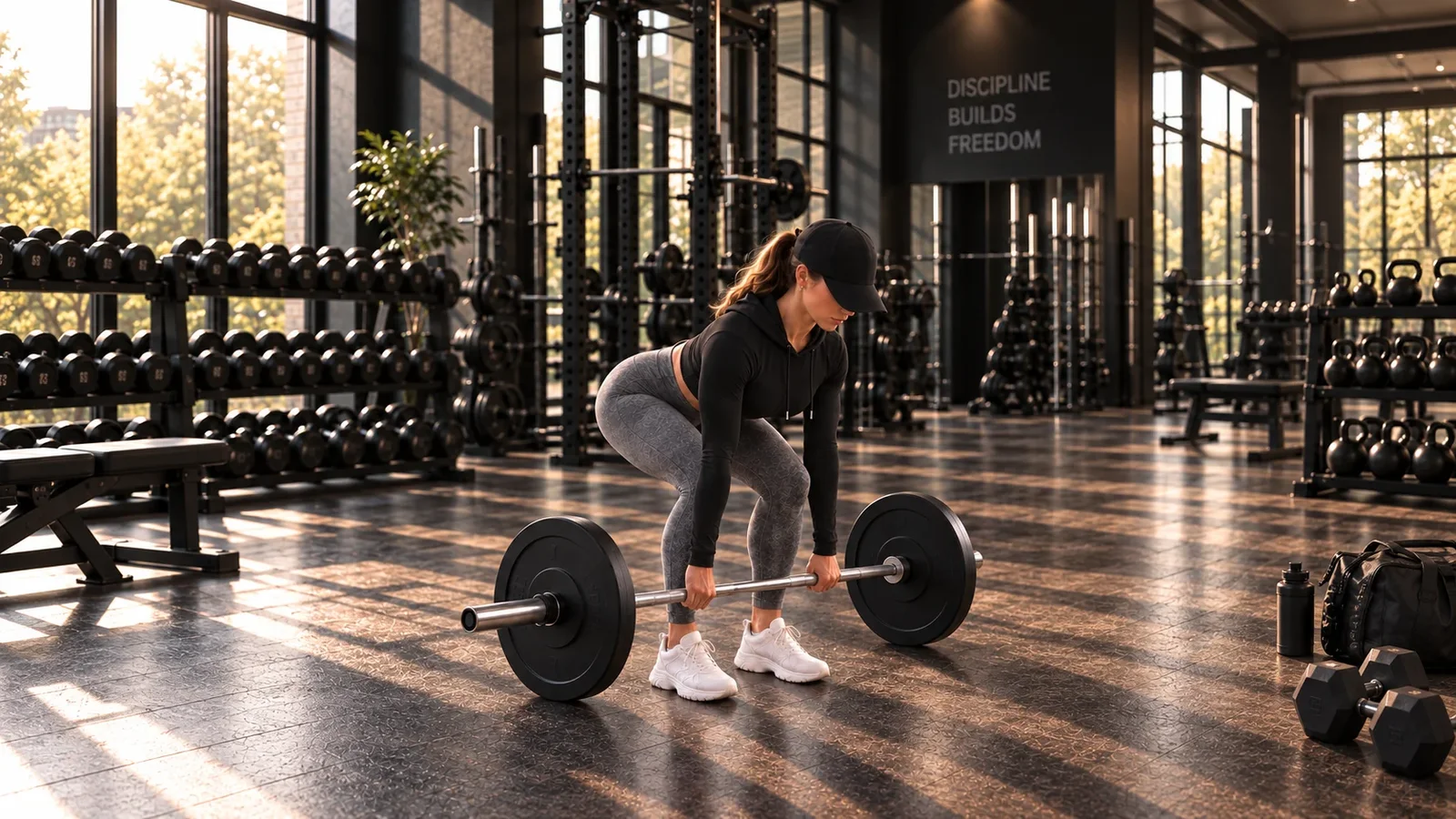
The sumo deadlift is the conventional deadlift's wide-stance twin. Your feet go well outside shoulder width with your toes turned out, and your hands grip the bar inside your knees. That wide stance lets your hips sit closer to the bar and your torso stay more upright, which shortens the distance the bar travels and eases some of the demand on your lower back. In a 2002 study in Medicine & Science in Sports & Exercise, Escamilla and colleagues compared the two styles in college football players. Sumo produced more activity in two of the quad muscles, while glute, hamstring, lower-back and inner-thigh activity came out about the same as the conventional style. So despite its reputation on social media as the "booty deadlift," sumo isn't a secret glute shortcut. It's a great choice if a wide stance suits your hips and build or if conventional pulls bother your lower back. Push your knees out in line with your toes, and remember that like the conventional deadlift, it starts from the floor rather than from a stretch.
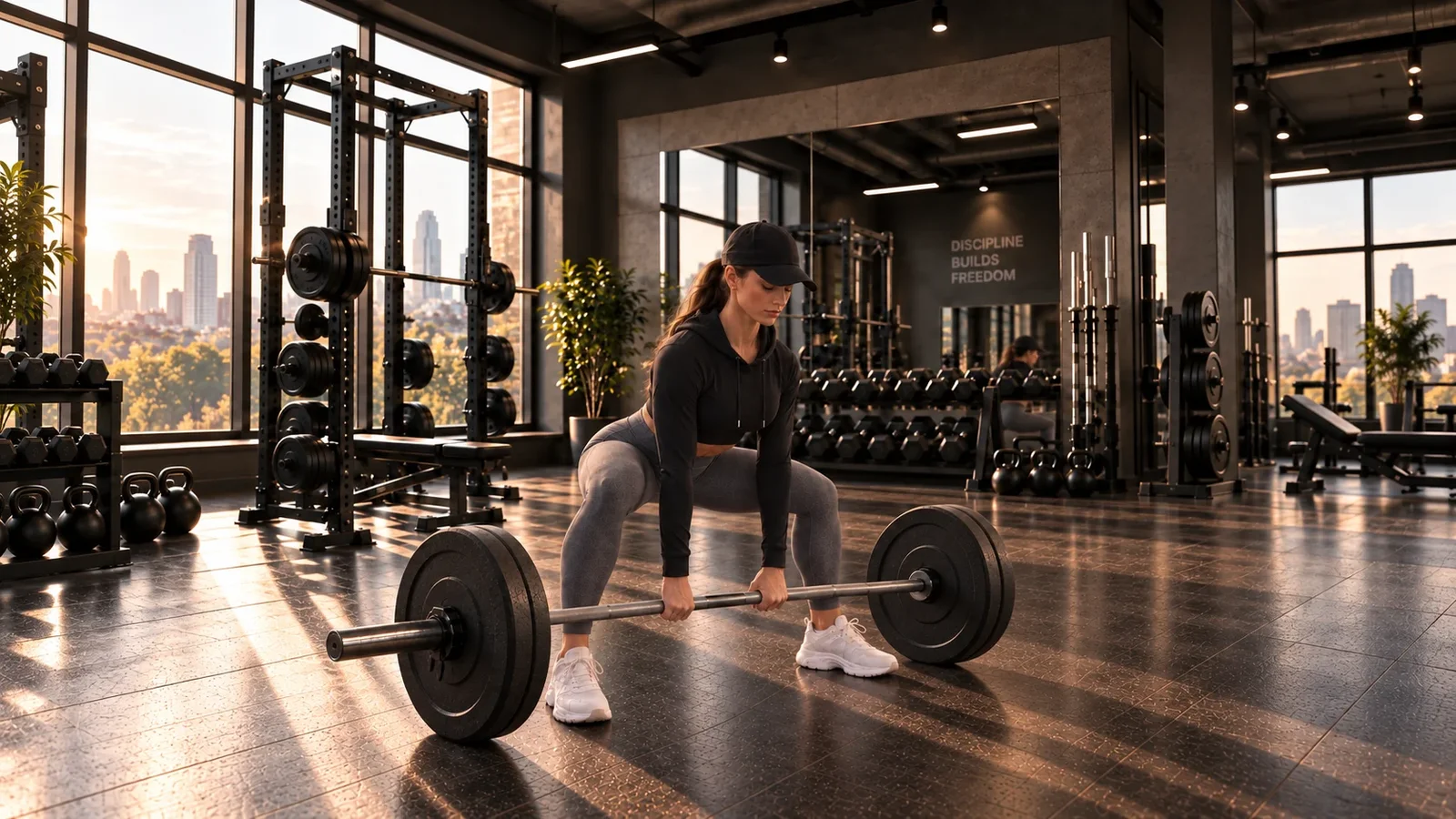
The Romanian deadlift (RDL) starts from the top instead of the floor. You stand tall holding the weight, keep a soft bend in your knees, and push your hips straight back as the bar slides down your thighs, stopping when you feel a strong hamstring stretch or when your hips can't go back any farther without your back rounding. Then you drive your hips forward to stand tall again. Because your knees stay mostly fixed, the quads are largely taken out of the lift, and the glutes and hamstrings take the load while being stretched. That stretched position is the RDL's real superpower. A 2021 study by Maeo and colleagues in Medicine & Science in Sports & Exercise found that training the hamstrings at longer muscle lengths produced more growth than training them at shorter lengths. The RDL gives you that same stretched loading for your glutes and hamstrings. It's also why the RDL earns a permanent spot in the Glute Gains Blueprint: it loads the glutes in a deep stretch, which complements lifts like the hip thrust that load them at the top.
The stiff-leg deadlift looks like the RDL's more intense cousin. Your knees stay nearly straight (slightly unlocked, never jammed back), and in most versions the bar starts from or returns to the floor on each rep, so you hinge deeper. That makes it a bigger hamstring stretch and a bigger ask of your flexibility. In a 2022 study in the International Journal of Environmental Research and Public Health, Coratella and colleagues compared the RDL, the stiff-leg deadlift and a "step" RDL performed standing on a raised platform. Glute activity was higher in the stiff-leg version than in the standard RDL, while the standard RDL worked one of the inner hamstring muscles harder. The catch: the extra depth only helps if your hamstrings can actually get you there. If they can't, your lower back fills the gap by rounding, and suddenly you're training your spine to do the glutes' job. The stiff-leg deadlift is a great tool for experienced lifters with good hamstring flexibility, and a questionable one for anyone forcing depth they don't have yet.
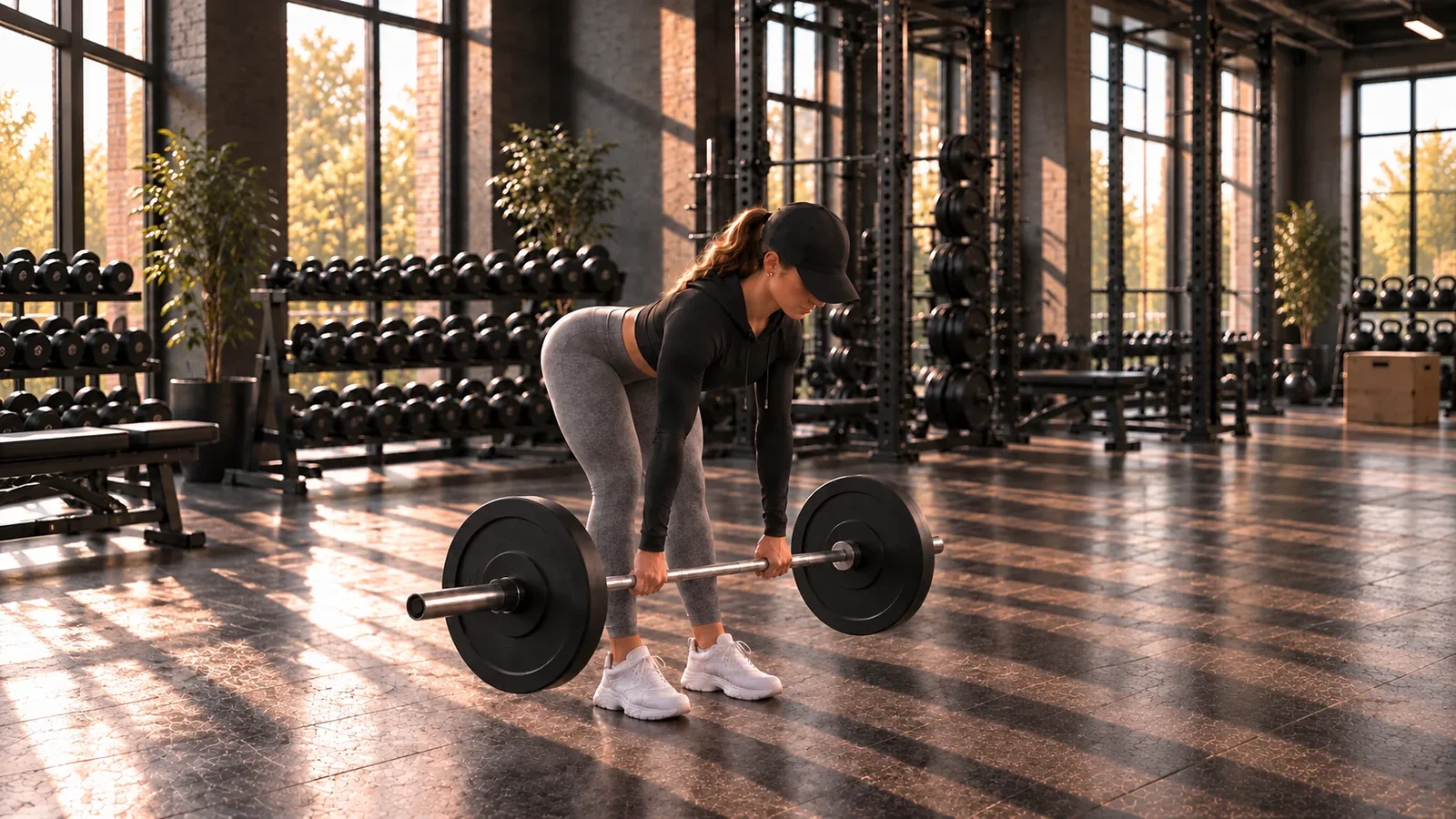
So which one should you do? If you want to lift heavy and train your whole body, a conventional or sumo deadlift is king, so pick the stance that suits your build. If you want more hamstring stretch and have the flexibility to own it, the stiff-leg version is a strong option. But for most women focused on building their glutes, the Romanian deadlift is the sweet spot: plenty of stretch, minimal quad takeover and a range of motion you can control rep after rep. Either way, how you do it matters more than the name: pushing your hips back instead of reaching the bar down, keeping the weight close, controlling the lowering and finishing with your glutes instead of leaning back.
The Glute Gains Blueprint gives you all of that and more. The app includes a demo video, a step-by-step setup and a built-in Tempo Coach for the Romanian deadlift and every other core movement, laid out across 36 structured workouts. Book One explains exactly why each exercise earns its place and how to progress it safely, and Book Two teaches you to feel your glutes doing the work. Get the app and both books at glutegainsblueprint.com and start training with a plan instead of a guess.
Get the BlueprintSources
- Lee, S., Schultz, J., Timgren, J., Staelgraeve, K., Miller, M., & Liu, Y. (2018). An electromyographic and kinetic comparison of conventional and Romanian deadlifts. Journal of Exercise Science and Fitness, 16(3), 87–93.
- Maeo, S., Huang, M., Wu, Y., et al. (2021). Greater hamstrings muscle hypertrophy but similar damage protection after training at long versus short muscle lengths. Medicine & Science in Sports & Exercise, 53(4), 825–837.
- Escamilla, R. F., Francisco, A. C., Kayes, A. V., Speer, K. P., & Moorman, C. T. (2002). An electromyographic analysis of sumo and conventional style deadlifts. Medicine & Science in Sports & Exercise, 34(4), 682–688.
- Coratella, G., Tornatore, G., Longo, S., Esposito, F., & Cè, E. (2022). An electromyographic analysis of Romanian, step-Romanian, and stiff-leg deadlift: implication for resistance training. International Journal of Environmental Research and Public Health, 19(3), 1903.
Disclaimer:This article is for general educational and informational purposes only and is not medical advice, diagnosis or treatment. Always consult a physician or other qualified healthcare professional before starting any new exercise or training program, especially if you have a medical condition, an injury, or are pregnant or postpartum. Stop exercising and seek medical attention if you experience pain, dizziness, shortness of breath or any other concerning symptoms. Individual results vary.